
Corporate Training & Workforce Development
May 29, 2025
Leadership and Soft Skills Training Through an LMS
Introduction
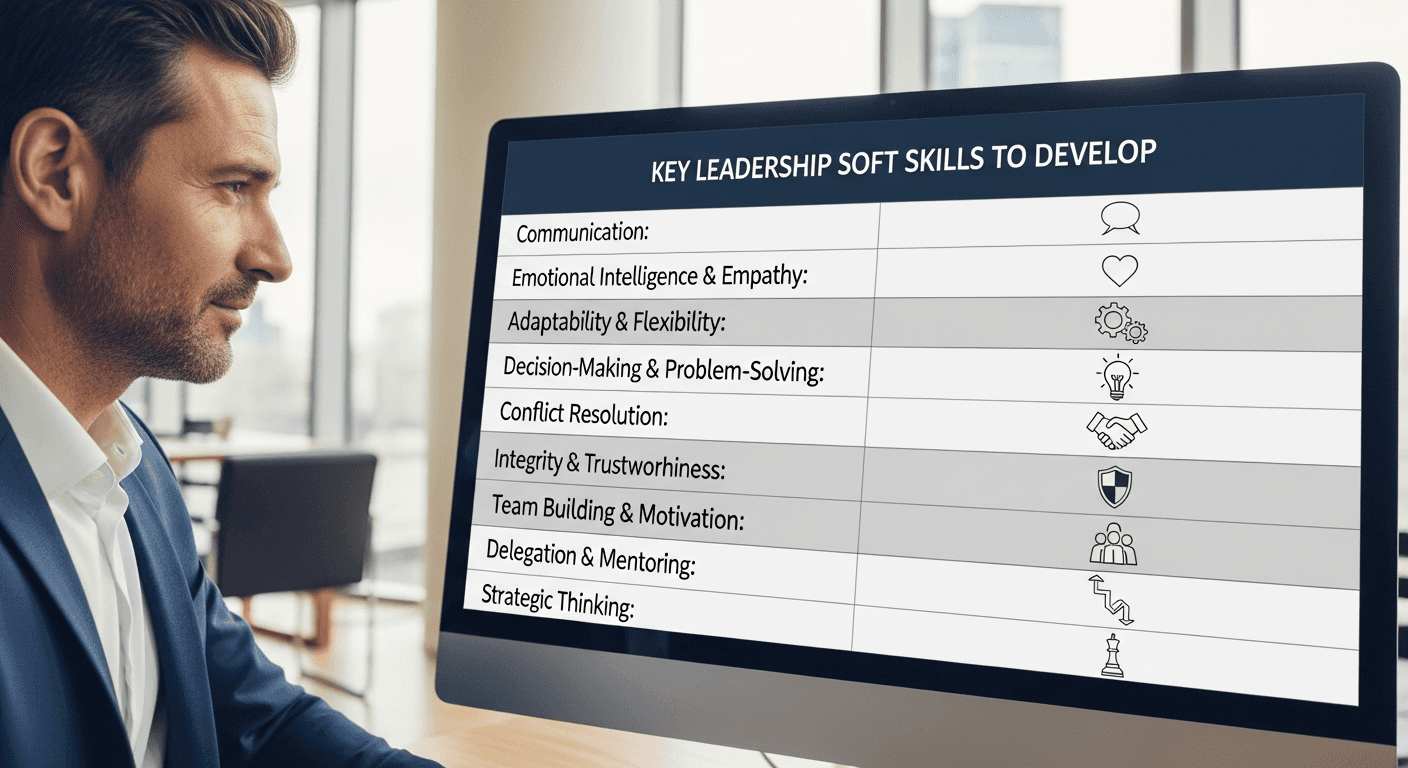
Technical expertise alone is no longer enough for success in modern organizations. Strong leadership, clear communication, emotional intelligence, and collaboration skills play a decisive role in team performance and organizational stability. As companies grow and teams become more diverse and distributed, developing these human-focused skills becomes increasingly important. A Learning Management System (LMS) offers a practical and scalable way to deliver leadership and soft skills training across the organization.
By using an LMS, companies can turn abstract concepts like leadership and communication into structured, trackable learning experiences.
Why Leadership and Soft Skills Matter
Leadership and soft skills influence how employees communicate, resolve conflicts, manage stress, and work together. Poor communication or weak leadership often leads to low morale, reduced productivity, and high turnover.
Training in areas such as decision-making, time management, feedback delivery, and teamwork helps employees perform better in their roles and prepares future leaders to guide teams effectively.
Structured Learning for Human-Centered Skills
An LMS allows organizations to organize leadership and soft skills training into clear modules and learning paths. Topics such as communication skills, conflict management, problem-solving, and people management can be presented in a logical sequence.
This structure helps learners build skills gradually instead of relying on one-off workshops that are easily forgotten.
Scenario-Based and Practical Learning
Soft skills are best learned through real-life situations. LMS platforms support video scenarios, interactive exercises, role-based simulations, and reflective assessments that mirror workplace challenges.
These methods help learners understand how to apply concepts in daily interactions rather than treating them as theory.
Flexible Learning for Busy Professionals
Leadership development often targets managers and senior staff who have limited time for traditional classroom training. An LMS allows them to complete training at their own pace and revisit materials when needed.
This flexibility increases participation and ensures learning fits into real work schedules.
Consistent Training Across the Organization
An LMS ensures that leadership standards and behavioral expectations are taught consistently across departments and locations. This is especially important for organizations aiming to build a unified management culture.
Consistency reduces misunderstandings and aligns teams around shared values and communication styles.
Tracking Progress and Development
Leadership and soft skills training should be measurable. An LMS provides insight into course completion, assessment results, and participation levels.
These insights help HR and management identify development needs, support succession planning, and evaluate the effectiveness of training programs.
Supporting Career Growth and Engagement
Employees value organizations that invest in their personal and professional development. Offering leadership and soft skills training through an LMS shows commitment to long-term growth.
This approach improves engagement, builds confidence, and helps employees prepare for expanded responsibilities.
Conclusion
Using an LMS to deliver leadership and soft skills training provides a structured, flexible, and measurable approach to developing people-focused capabilities. It helps organizations build stronger leaders, improve communication, and create healthier team dynamics. By investing in these skills, companies strengthen not only individual performance but also overall organizational effectiveness.